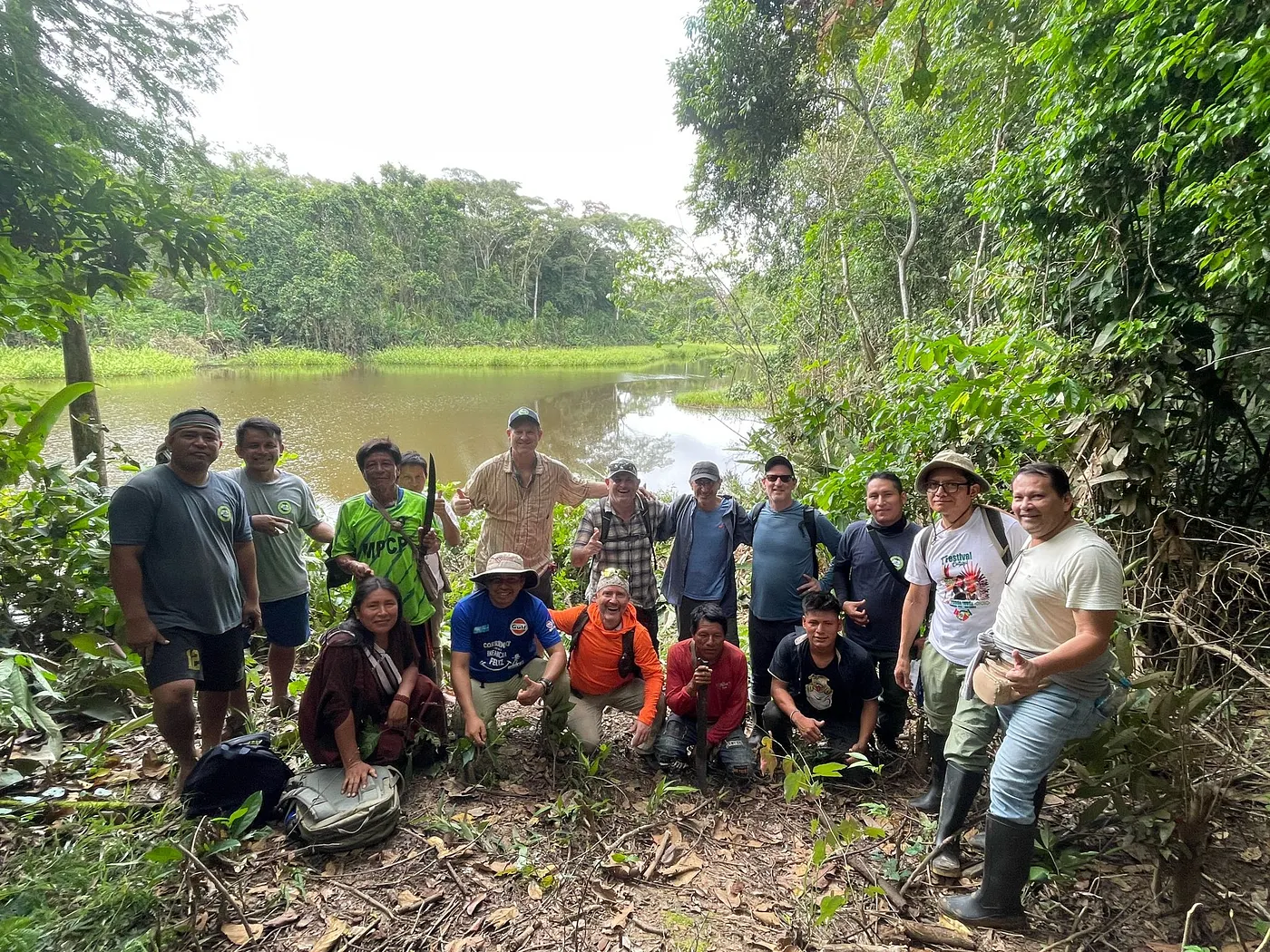
I've supported my friend Chris Fagan and his organization, the Upper Amazon Conservancy (UAC), for ten years. UAC partners with Indigenous communities and their federations to promote sustainable, profitable livelihoods and to strengthen stewardship of their lands and adjacent protected areas. In my experience and from talking to others, what separates Chris's organization is the relationships his team has built with communities in the remotest regions of the Peruvian Amazon. His team, made up of both Indigenous and native Peruvians, is on the ground, working side by side with their Indigenous partners in remote and dangerous territory.
Over the years, I helped Chris shape the organization, balance priorities and budgets, and assisted him in thinking through staffing challenges in Peru. I knew what UAC was accomplishing, but my understanding was simplistic and abstract. I hadn't met the people, walked through the dense jungle, hardened my ass on the seat of a river boat for 8 hours, or heard the stories of the people of the Yurua firsthand.
Fundraising was a key responsibility of my support role, and that never came naturally to me. I remember the first time I wrote to friends and family, trying to share Chris's story through the lens of my own experiences, but it wasn't truly my story. My call to action wasn't inauthentic; I genuinely believe in Chris and his team, but it was not informed by experience. If, after reading this story, you are interested in donating or learning more about UAC's work, please reach out to me, and we can discuss.
In May 2024, I flew to Peru, and soon I found myself in an open boat, winding my way along the muddy Yurua River, surrounded by dense, green jungle. Sweat dripped down my face and back, and spittle from the near-constant chewing of cocoa leaves dangled from my lips. My skin was burned from continuous exposure to the near-equatorial sun. Still, my heart was whole, and my head was filled with ideas, insights, and inspiration.
I visited Indigenous communities and met the UAC staff who are working tirelessly to preserve cultures, protect lands, and support the Indigenous efforts to maintain self-determined lives in their ancestral homes.
I returned home with notebooks overflowing with names, places, and stories, but also carrying something more profound, my own stories to tell.
There are many stories I could tell, including tales of resilience, success, struggle, and heroic acts by Indigenous people as they stand up for their rights and communities. Not wanting to romanticize my experience, there are also stories of murder, retribution, and Indigenous justice, but others have told those stories, and they were stories I heard only and did not experience for myself.
The story I'm going to tell is more personal and less about my experience there in relation to UAC, and more about an experience that was informed not only by the place and people, but also by my own past and possible futures.
Here is that story
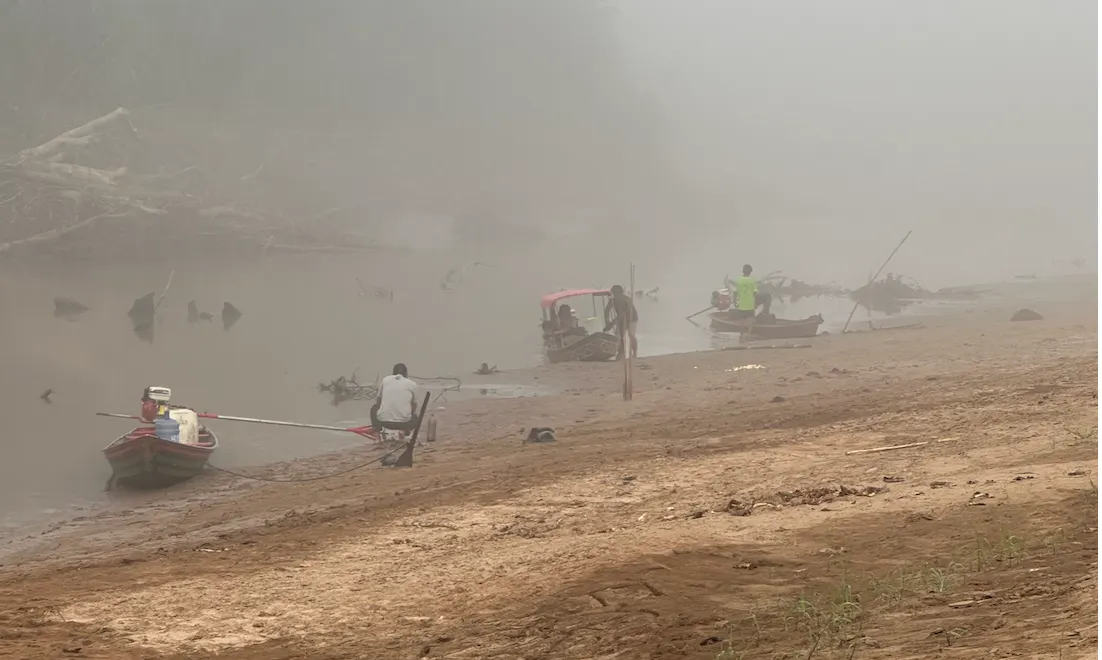
We were on the banks of the Yurua River, heads pored over maps, examining the terrain, learning about the Indigenous groups' boundaries, forest concessions, and narco-trafficking routes. Our trip was coming to an end. We were exhausted from the travel, our asses sore from hours in the boats, our skin burned from sun exposure, and our minds spinning from the things we'd seen, people we'd met, and opportunities to do something good in front of us.
As we moved down to the fire pit we had built by the river, we watched the dense clouds of bugs surround the flames and light up the eyes of the caymans across the banks. Chris pulled us together for a conversation.
"I don't know if this is something you all are into, but we have an opportunity to attend an Ayahuasca ceremony tomorrow."
The hook was set. After much discussion and working through our initial trepidation, we agreed to take a leap of faith and embark on a new type of adventure. The next day, we headed to Puerto Breu, a small jungle outpost/town where UAC's field office is located, and that serves as the capital of the Yurua River region.
Into the Heart of Darkness
Our ceremony was to be led by a Brazilian shaman and take place in an Amahuaca village downstream from Puerto Breu. Getting to the village was one of the scariest moments of the trip. Chris tried to keep the group moving all day, but the villagers don't adhere to strict Western time, and the day kept slipping away from us.
Chris has two rules: never get on the river at night, and never get on the river in a storm. These are sound rules, practical, and informed by years of experience.
We broke both.
By the time we left, the sky was pitch black, no moonlight, thick clouds, and not a single light along the water. The only illumination came from the narrow beam of a headlamp strapped to our boat driver's forehead. We had to travel thirty minutes downstream in an open boat, along a river riddled with snags, shallows, and whirlpools. The driver had nothing but instinct and experience, and that small cone of light to guide us. We rode in silence, filled with anticipation and a constant fear that our boats would not reach their destination intact. I sat in the bow of the boat. There was an old rifle that looked like it had come to the region with Pizzaro, lying at my feet, and a bucket of recently caught fish crushed up against my ankles. I sat, straining to see what lay ahead, trying to be helpful to our navigator, knowing I couldn't be. It was terrifying.
When the storm hit, it felt like a movie, sheets of rain hammering down, our boat swerving every few seconds to avoid a boulder, a snag, or the bank itself. Think Apocalypse Now, Martin Sheen moving through the jungle rivers, that relentless, pounding chaos. And of course, someone had forgotten the ponchos. We were soaked through within seconds.
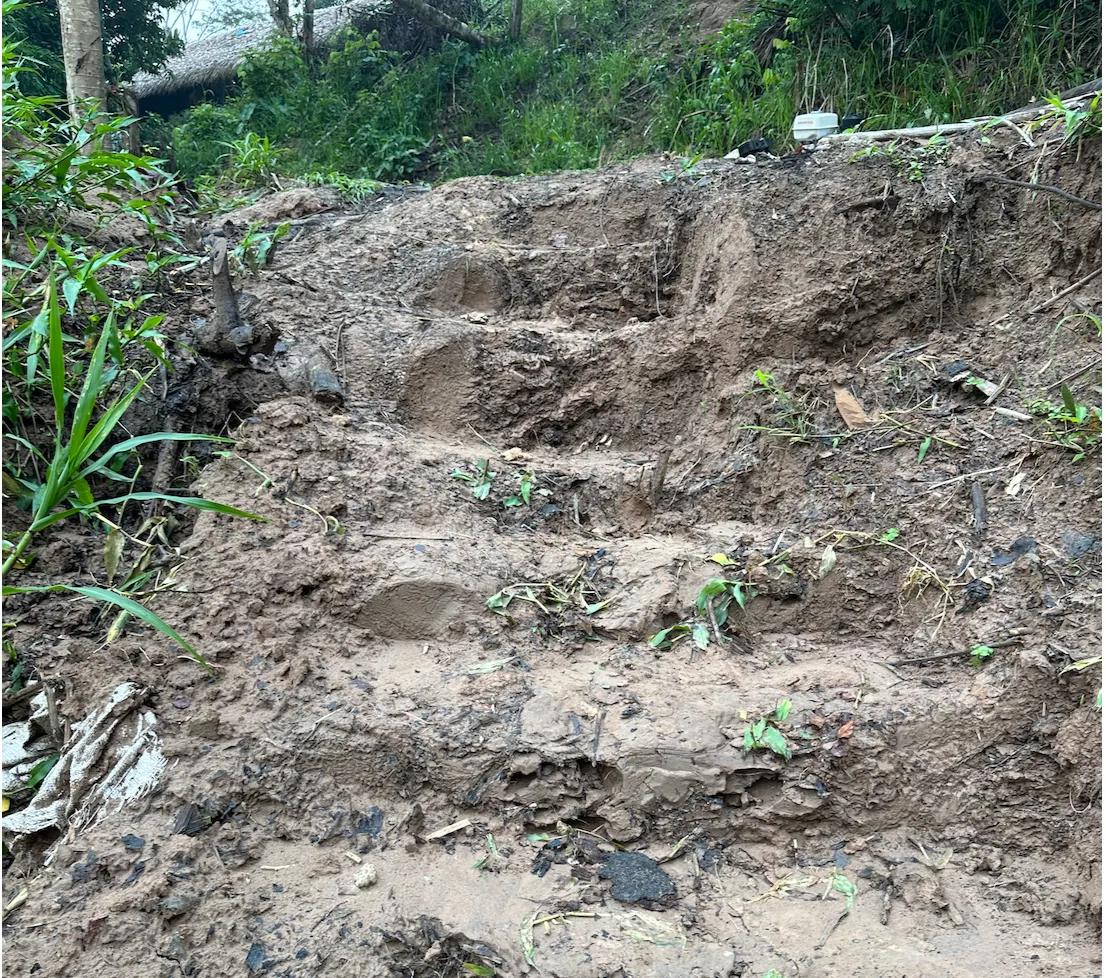
As we pulled our boats up to the riverbank, in the dark of the night, we saw, or rather felt, the presence of the mud-filled hill we'd have to climb, with all of our gear, to get to our ceremony.
The climb to the village was a scramble up slick, red mud, more like a waterslide than a path. Every step required anchoring hands and feet, and for every two steps forward, we'd slide one back. I had to be careful with each step to not slide back into one of my fellow travelers, knocking them down to the bottom. I didn't want to be that guy.
There were makeshift stairs cut into the slope, but they'd long since lost their shape and were of little use in easing the climb. I tried hauling a five-gallon water jug up the bank, but kept losing my footing, sliding back a few steps, and away from the top. At one point, I lost my grip completely, the jug rolling past me as I clung to the mud, trying not to take anyone else down with me. It felt absurd, like Sisyphus, covered in mud.
As we struggled up the hill, our Indigenous travel partners glided right up, looking back at us with kindness, but they also held a smile that projected "these white dudes are helpless." We were, compared to them, babes, out of our element, and helpless in theirs. It was one of the many times on this trip that I realized, as adventurous as I thought I was, that in reality, I was pretty soft.
In the distance, music began to rise from the dark: guitars, maracas, drums, and chanting. Fear and exhaustion gave way to an excited anticipation. This was like nothing I'd ever done before, and I hadn't even taken ayahuasca yet. It was hard, uncomfortable, even scary, and I loved every minute of it.
When we finally completed our ascent up the muddy banks, we walked down a jungle path about a quarter mile. As we grew closer, the music grew louder, and at long last, we stepped into an Amahuaca village of about twenty families, small, deeply isolated, though not uncontacted. No roads, no infrastructure, no bathrooms, just a scatter of thatched huts perched above the Yurua River, surrounded by the densest biodiversity on earth. Chris told me this village might see outsiders once a year, maybe a missionary, perhaps a conservation team like ours. It's so fucking hard to get here that few even try.
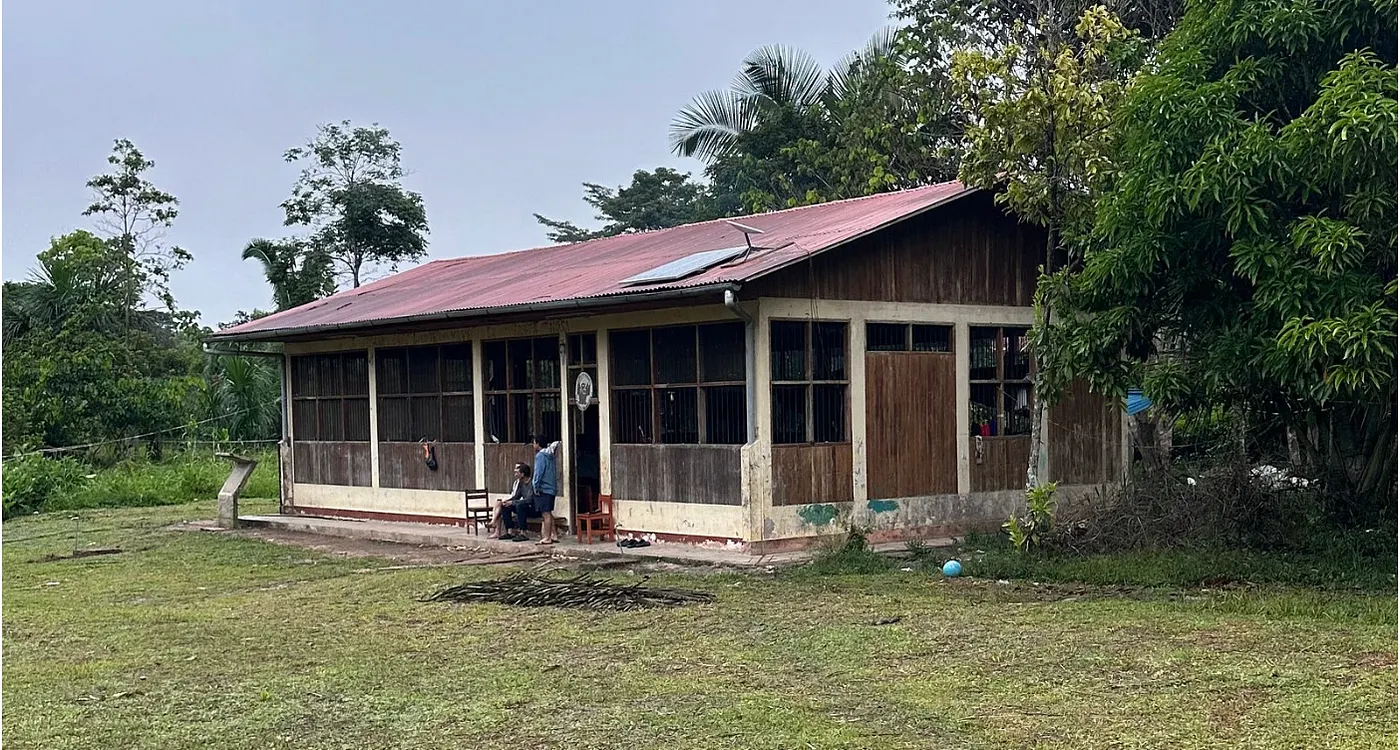
The village, like almost all those we visited, was rectangular in its layout. In the center, there was a soccer field. At each stop along the way, we saw children playing soccer in these fields. While they lacked the fancy uniforms, cleats, and equipment found in the States, the quality of play was always incredible. Our ceremony was to take place in the community school, a 40x20 wooden structure with a metal roof and a concrete floor.
The rain continued to pound us as we made our way to the community school. The sound of drums and chanting grew louder as we got closer to our home for the night, a camping tent on a concrete floor. I was filled with excitement, part nerves, part fear of the unknown. But mostly, I was really digging this moment. I loved the strangeness of it all.
Beneath that excitement, though, was an ever-present anxiety. I'd done psychedelics before, mushrooms, LSD, and mescaline, and I knew that tripping on any of these drugs could be unpredictable. In the experimental days of my youth, I'd had trips that provided moments of crystalline clarity and deep introspection, and others filled with grief, confusion, and darkness. I am older now and generally hold less grief and confusion in my heart and head, and that gave me confidence. I felt prepared, centered, and hopeful about what the night could offer, but experienced enough to know that I might get something very different than what I hoped for.
While we were in an Amahuaca village, our shaman and his people were Huni Kuin, which translates to "true people" or "people with traditions." They had traveled seven hours by boat from Brazil, twenty of them, men, women, and children, to share their gifts and provide an opportunity to heal us. Despite their effort to reach us, the service was free. We paid for their boat gas and some food, and we also donated a guitar that the shaman had requested.
The Huni Kuin live in the transboundary area across Peru and Brazil, though the people and their cultures move fluidly across those "artificial" borders. In practical terms, though, the difference is striking. In Brazil, there are large Indigenous reserves that are protected from destructive logging and mining. Brazilian communities are functioning more closely to what UAC hopes to achieve in partnership with the Peruvian Indigenous, but loggers still run the Peruvian Amazon.
Honoring the Medicine
We gathered in a large circle, and the shaman began by explaining the ceremony's purpose, its traditions, and the importance of the space. He spoke Huni Kuin; his words passed through two translators before reaching me. Even through the layers of translation, his presence was overwhelming. His voice was soft but commanding; his headdress was adorned with massive plumage, making him appear larger than life. He spoke through us as much as to us. It already felt surreal.
He asked us to take a few minutes to identify our intentions, to clarify the question or purpose we were bringing to the medicine. Since Chris first mentioned the possibility of this ceremony to me, I'd spent time preparing, meditating, and talking with others who had experience with the ritual. I was determined to enter the night with an open heart and a steady mind. A bad trip could be traumatic, and I wasn't about to take this opportunity lightly.
My intention was simple. I wanted to speak with my late father and introduce him to my children. They knew him as young children, but he passed on before he had a chance to get to know them as adults. He had been a man of science, and both of my kids followed in his path: my son as an engineer working in drug discovery, and my daughter as a neuroscience researcher. I miss my dad, but what I miss most is the opportunity to hear him and my children talk about their work, learn from his experiences, and see them form relationships of trust and mutual admiration. It's a loss for my children, and I carried that grief with me.
We sat in silence for several minutes, each person focusing on their purpose and their goals for the experience. Not all ceremonies are the same; each shaman brings different customs, rituals, and contexts. I appreciated this one. The intention anchored me later, at least for a while, when the serpent reared its head and challenged me to look deeper.
After the silence, we formed a circle around the shaman. He lifted the ayahuasca, a thick, brown brew sloshing in a battered two-liter Coke bottle, and raised it high above his head. He prayed and chanted, and his people answered in rhythmic unison: a deep, resonant hoo, hoo, hoo. It was haunting. With my intentions set, the ceremonial purpose established, it was time to imbibe the brew.
Sharing the Medicine
The shaman called up the children first; you read that right. The first to drink might have been as young as eight years old. Their parents brought them to him for healing, believing that the ayahuasca opens a connection between the shaman and the child's mental and physical ailments.
Next, he called up the gringos. There were five of us, all somehow connected to Chris. We really stood out in this crowd, but we were never made to feel anything but welcome and crucial to the event's success. Chris went first. I went second. The drink tasted bad, like stale, over-brewed coffee left out for a few days, but I didn't hate it.
After everyone drank, we waited in silence. It takes about thirty minutes to begin, and the intensity builds gradually, much like the arc of mushrooms, though somehow entirely different. While we were waiting, a mother brought her sick infant to the shaman, and they sat together. He blew a fine mist of ointment over her, prayed softly, and held her with such comfort and care. He had a power I could feel but couldn't describe. I don't know if the child healed, but it was beautiful to witness the loving care and compassion he showed both the mother and child.
After about fifteen minutes, I started to feel the first effects. The stone floor, composed of many separate two-foot-square concrete slabs, began to move as one unified surface, shifting into patterns with depth and geometry. If I blinked, I could turn it off, but I like the visual part of tripping, so I let it go on and stayed in that moment.
3-2-1 Liftoff
After about thirty minutes of deep quiet and anxious waiting, the Huni Kuin began chanting and playing instruments to call the ayahuasca into our thoughts and experience. This ceremony was anything but silent. The chanting and singing to the medicinal plant continued for hours, interwoven with ritual dancing, pauses to administer medicine, and brief rests for the musicians. All night, our little community center was filled with voices, rhythm, and motion.
The shaman stood at the center of it all, like a conductor guiding an orchestra through a long crescendo. The Huni Kuin women were dressed for the occasion, their faces painted, their bodies adorned with beaded jewelry, and their piercings ceremonial and proud.
I've read about and spoken to others who attended ayahuasca ceremonies, where the shaman quietly supports you step by step through your experience. Those settings sound therapeutic, and people I've spoken to have made breakthroughs in that setting that helped them deal with past grief and trauma. This was not that. The shaman and his medicine man were ever-present, but the visions, the music, the dancing — all of it — felt like the chaotic energy of protons, neurons, and electrons colliding.
Forging Connections
Just as I was starting to fly and see intense, beautiful visuals, all with my eyes closed, the Huni Kuin women began a serpent-like dance to call the medicine forward and deepen the experience. I learned it was the dance of the Boa or anaconda, as the Huni Kuin believe the power of Ayahuasca comes from the Boa.
They held hands and danced in a serpentine pattern, repeating it again and again. Then they grabbed us, bringing us into the movement, bobbing and weaving, twisting and turning to the chants' repetition. It was fucking awesome, but also a bit overwhelming as the medicine really started to kick in. I had no control over where I was going in this dance. Every so often, we'd make a turning motion, and I'd be face-to-face with Chris, and all we could do was smile, knowing that we were sharing something that was beyond our love of the Pats, our memories from childhood, or the last Phish show we went to together.
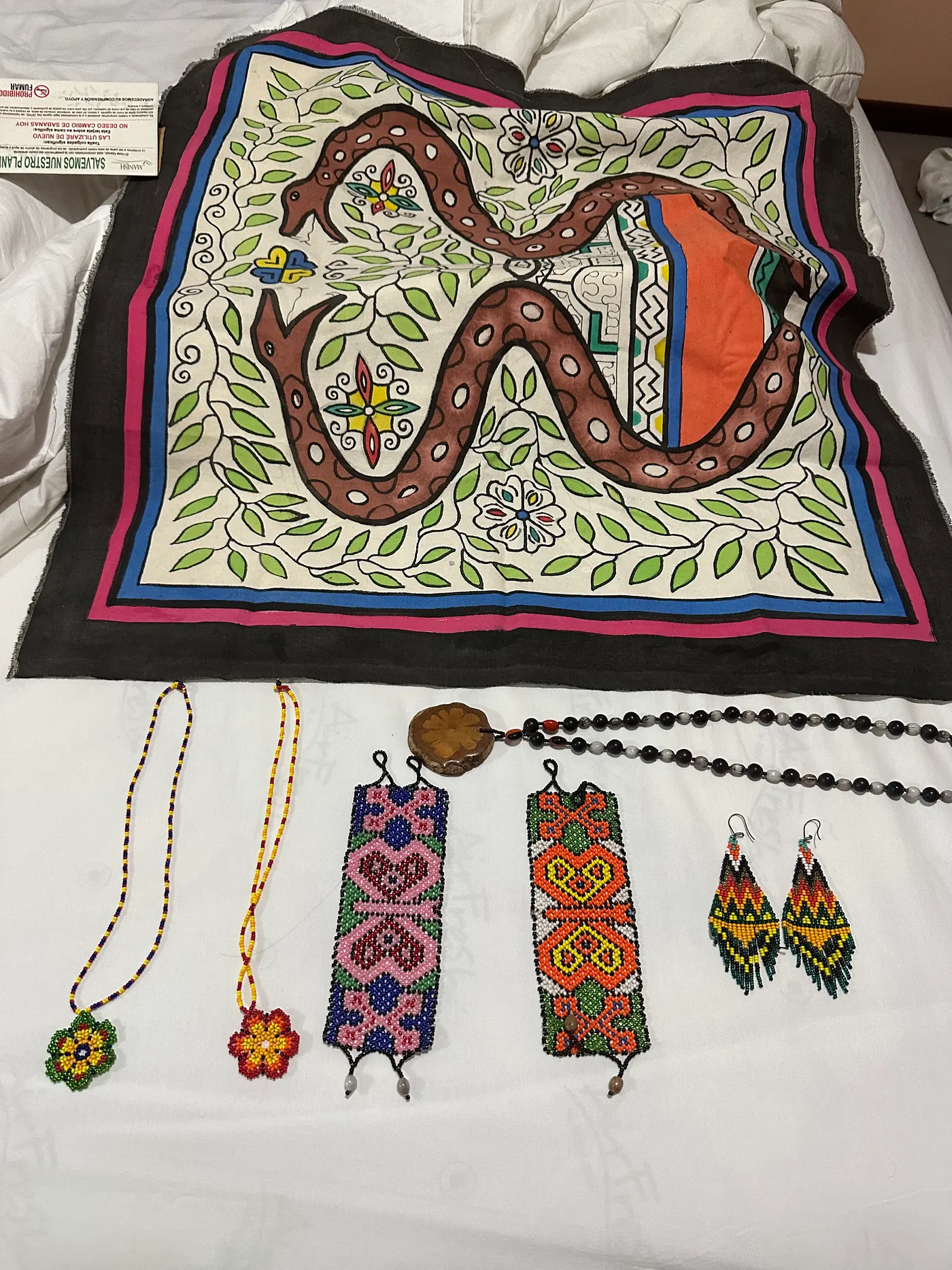
In the middle of the dance, I reached a place where I could connect with my father. As I moved through the bobbing and weaving, I found myself in deep conversation with him, sharing stories of Maddie and Dylan that I wanted him to know and absorb. It was otherworldly, foreign, a bit chaotic, but ultimately soothing. The conversation wasn't bi-directional; he wasn't there in any visual or physical form, and he didn't speak or respond to me, but he was very much present at the nexus of my heart and mind. The conversation was as real as any I've had in the physical world.
The connection with my dad was powerful. It felt as if the grief I'd carried for years was purged from me, and it still feels that way. I miss him and always will. He remains gone from this world, but what I gained was the chance to share and say what I needed to. It was such a genuine and engaging conversation that I wanted to connect more deeply with others in my life as well.
Those connections, though, would have to wait.
The Purge
Most people, but not everyone, vomit as part of this experience. I am told that spiritually, it's seen as a necessary process, a release of the energy that needs to leave the body. As the dancing started to make me dizzy, and my stomach was reacting with me on a very visceral level, I went out into the field with many others, and the retching began.
It was violent, powerful, and challenging, but in the moment, I never regretted being there. It felt more like paying a tax: unpleasant, inevitable, but hopefully part of building something bigger. I knew it would end eventually, and I understood the significance of the purge.
Three times, I thought I was done. I'd rise from my crouch, thinking, I'm good, and the serpent would surge back up with force. I think I threw up a meal I ate in 1987.
My friend Chris was out there too, and later he told me I basically turned into a Sasquatch. I'd retch three or four times, purge whatever was inside me, then run in circles, massage my head, chant from my gut, pound my chest, and howl like an ape, and then retch again. I remember most of it. I knew it was unusual behavior in real-time, but it felt right.
The visuals were wild at this point. I remember looking at my feet; they looked like hobbit feet. I yelled out, "Why are my hands and feet so small and hairy?" and then laughed hysterically with a whole-body laugh that made me sore, due to the puking. Then I puked again.
I wanted to lie down in the field and just let the experience unfold, but by now the place was full of vomit, and I think I probably stepped in lots of pig shit, too. I tried to find a calm spot on the porch of a nearby lean-to, but a local dog was already there and made it clear he had no tolerance for an aya-induced gringo.
As the retching subsided, I retreated inside to take in more of the music and chanting and to rejoin the communal ceremony. After feeling that I had successfully connected with my dad, I wanted to reach others as well, to share my feelings in that moment and see what new understandings might arise from those connections. I retreated to my tent, in the center of all the action, to lie down and see what would unfold. I was alone in my tent, but just a few feet away from my support network if my mind went places I didn't want it to go. I was both in the ceremony in this physical space and deep in my own head in a spiritual place.
Chaos Ensues
My wife and children were next on my list to summon to this space. In the physical world, I tell them I love them all the time. I have a wonderful family dynamic, and I feel blessed, knowing that's not the case for everyone. But in this spirit world, the communication I could pour out was more like energy — light and molecules connecting and bouncing off each other. I was able to make connections with them, and, as with my father, I felt their presence with me. Within that space, I had some fantastic conversations and experienced loving sensations that were feelings I had not felt before, after, or since. Still, I know they are there and are the foundation of those relationships.
This experience of summoning people I wanted to share with went on for hours. It wasn't linear. Sometimes I would summon someone, spend time with them, and move on, but often the boa bobbed and weaved, bringing people together as a collective or as individuals. It was challenging to manage at times, and there were moments when I felt it could slip away from me, but I dug in and did all I could to keep my energy focused on connections and on finding positive paths through them, even the difficult ones.
I traveled through a community I've been blessed to know, from brief encounters with one person to more profound moments with high school and college friends, extended family, New Paltz friends, and work colleagues. I reached out to people who are still living and those who have passed away. If I spent too much time away from my immediate family, I'd say, "Sorry, you're my priority. I'll be right back." My dogs came in and out, too; they were the only beings that appeared with a complete physical presence. I think I willed them to be with me as comfort objects when my brain wasn't behaving.
I spent significant time expressing gratitude to my former boss, whose intelligence, drive, and commitment enabled me to reach a remote corner of Peru. Meeting and working with him gave me the luxury and privilege of letting my heart and mind enter this alternative space of positive energy and connections. I learned valuable lessons from him that helped me navigate and manage this experience. I feel obligated to share that with him. That might be weird, but I'm going to try.
Through all the connections and missed connections, there was never any negativity or anger toward anyone. If I summoned someone and couldn't connect, it didn't mean they weren't important to me, just that our experiences together weren't ready to reach this space at this time.
The Boa's Tail
I was feeling proud of myself for where I was going and how I was navigating this experience. I was thinking, Man, buddy, you're good at this. You wanted to talk to your dad and release the grief, and you got there. You tried to let go of guilt and be more accepting of others while still protecting the deep relationships that matter most, and you got there. In that moment, in my head, I was the Larry fucking Bird of self-discovery through ayahuasca.
In this world, I still had an ego, and boy, was I proud of myself. I'd done the work, I'd prepared, and I was rocking the spirit world. I was proud because, while it might sound fluid and easy, it was tough to stay in this experience. I was constantly having to redirect myself to refocus my attention on my primary objectives. The first conversation with my dad was straightforward; I'd prepared for it. But the others? They were hard to reach. My mind was wandering like the serpent dance itself, and I had to dig deep and refocus again and again. I was feeling some success, and I was proud, but soon the serpent let me know I wasn't done quite yet.
Chris coaxed me out of my tent because the shaman wanted to spend time with each of us individually to help heal us. Again, my ego kicked in: That sounds cool, but I'm cured. Watching him work with others was fascinating, and I didn't want to miss out, but my curiosity was more voyeuristic than vulnerable.
The shaman saw right through that. I could feel his energy pulling at mine. My first reaction was pure physical-world defense: Dude, I'm good. Let's have some fun here; there's no healing needed. We didn't share a language; he spoke Huni Kuin, but the connection went beyond words. Whether it was his power or the drug, I felt him say, Step back, buddy. You're not done here.
I didn't care whether it was shamanistic mysticism, the medicine's biochemical reaction, or some combination of both. I accepted his presence and gave in.
I sat down in a chair, closed my eyes, and let him work. He chanted, rubbed my head, blew air in precise places, then fanned me with smoke from mapacho, a local tobacco-like plant. It was powerful and grounding. Looking back, it was pretty weird too, but in the moment, it felt right.
Next, he had me stand up, and he removed his magnificent headdress and fanned me with it, praying over me, reaching into places my ego wasn't willing to go, the deeper work beneath the surface. Maybe he sensed that side of me, too, because he spent more time with me than others. That's probably not true, but it felt that way. I started to wonder if he sensed more darkness in me than I wanted to admit still lingered there.
As he chanted and fanned me, his headdress brushed against my chest hair. That moment of contact unlocked parts of me I thought I'd outgrown, anxiety, anger, guilt, things I'd tamed as I got older, calmer. Whether that was his intention or just where my mind went, I don't know. But it didn't feel dark. It felt real.
It reminded me that those feelings are still in me, waiting, and that real healing means going back to them, away from this place and experience, and confronting them honestly and wholly.
A Brief Holy Shit Moment
After my one-on-one time with the shaman, I was starting to wind down. The medicine man and the shaman offered Indigenous remedies for various ailments. One of them, the medicine man, who spoke Spanish, came over with a small bottle of tincture. My Spanish is okay, but no matter how far out there I was, I wasn't just going to drink some unknown liquid on a whim. I'd puked enough for one night, and I was grounded enough to know I needed to make informed decisions. So I grabbed a translator.
He handed me a capful of the liquid, and the translator said it was for prostate issues and high blood pressure. Holy shit, I thought, my worldview tilted. I have both those conditions. How the hell could they know? Perhaps there was indeed some mystical insight that shamans had access to. Then the translator added, "It's also for low blood pressure, sexual potency," and about five other things, so much for my brief brush with jungle clairvoyance.
Even so, I still believe deeply that there's real power in these plants and these ceremonies. The presence of the shaman and his people, the music, the dancing, the intensity of it all helped me access parts of myself that are usually hard to reach. My experience left me convinced that ayahuasca, delivered in a safe and intentional setting, can offer real relief from grief, pain, anxiety, and guilt. But yeah, I'm still taking my blood pressure meds.
I don't recommend anyone doing this, particularly if they have pre-existing mental health issues, without a lot of research and guidance from medical practitioners. There was a lot to process, and my brain was moving a thousand miles an hour. Ultimately, I look back on this positively, but there were certainly moments where it could have gone awry.
Countless other moments were funny, powerful, or oddly healing, but the real depth came from the connections and conversations, especially the time with my dad and the shaman's work on me. I still miss my dad, but now it feels different. Lighter. Like some part of what I'd been carrying finally loosened its grip.
Note
This particular experience was powerful, spiritual, moving, and healing, all positive qualities. But I didn't come down here to get eaten alive, risk malaria or diarrhea, or gamble with missing my daughter's college graduation to do ayahuasca.
I came here to support the Upper Amazon Conservancy. I came to meet the people they work alongside, learn about their cultures and traditions, and see firsthand where projects are succeeding and where we need to push harder or think differently.
These villages are littered with artifacts from failed government programs and abandoned NGO initiatives. UAC projects typically don't fail because every effort is built in close collaboration with Indigenous leadership. They've forged lasting relationships, even between groups that, a few generations ago, would have raided each other. They've lost friends, murdered by loggers, narcos, and isolated tribes that live nearby and now aggressively defend what's left of their own dwindling territory. The goal of UAC is unwavering and straightforward: support Indigenous communities on their path toward self-determination.
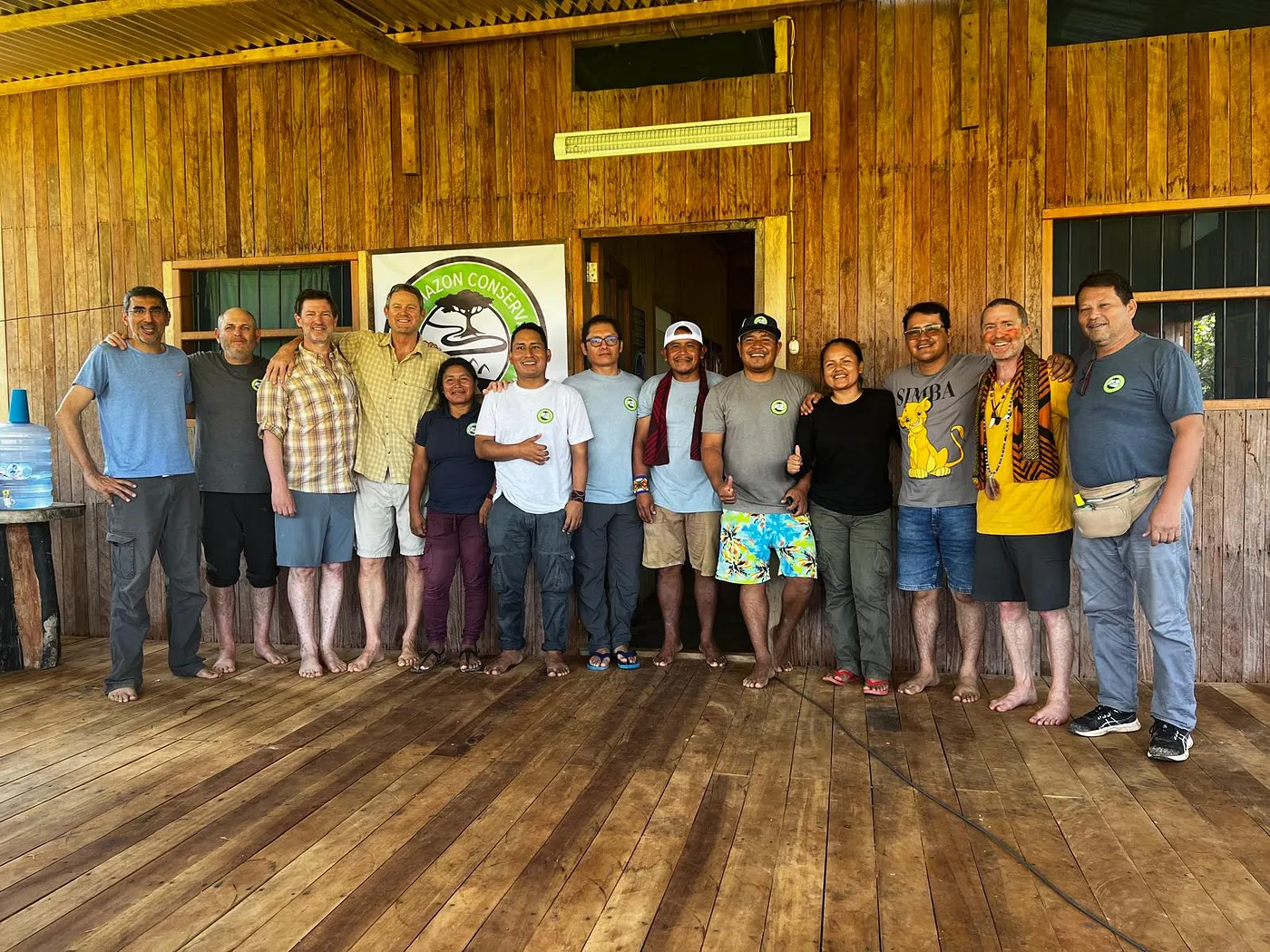
I leave with renewed passion and a dozen other stories to tell about people other than myself. My ayahuasca journey was special, authentic, and extraordinary. I recalled that story first because I know I'll lose that voice soon, and I don't want to forget how I felt, thought, and experienced the world in that space. It was special.
However, that story about me is far less important than the ones I have to share about the Asháninka, the Yaminawa, the Huni Kuin, the Amahuaca, and the others I met in Dorado, Dulce Gloria, San Pablo, Santa Rosa, and Nueva Victoria. Their stories are complex, fascinating, full of need, and rooted in kindness and love. There are also contradictions and a tendency to romanticize that we must keep in check, but there is excellent work to be done, and no one I trust more with my own money than UAC.